
The Pakistan Army intercepted and destroyed Afghan Taliban drones targeting civilian areas, resulting in injuries. This incident has further strained relations between the two countries, with Pakistan reiterating its commitment to combating terrorism emanating from Afghanistan.
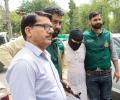
Delhi Police have arrested a suspected Lashkar-e-Taiba (LeT) handler, Shabir Ahmed Lone, in Delhi, uncovering a terror module with links to Pakistan's ISI. Lone is accused of running a network involved in pasting anti-national posters and planning terror activities across India.

At least seven police personnel were killed in an improvised explosive device (IED) blast targeting a police vehicle in northwest Pakistan, local police said.

Three inmates, including two Pakistani nationals, escaped from a juvenile home in Jammu after allegedly attacking and injuring two police personnel. An investigation is underway to apprehend the escapees.

A suicide bombing at a checkpost in Pakistan's Khyber Pakhtunkhwa province has resulted in one death and 19 injuries, including security personnel. The attack, claimed to be targeting civilians by the banned Tehreek-e-Taliban Pakistan (TTP), has prompted a security response and condemnation from the Chief Minister.

The Pakistan hockey team faced a severe accommodation crisis in Canberra after their hotel bookings were cancelled due to the Pakistan Hockey Federation's failure to pay the bill. Players were left stranded and forced to find alternative solutions.

'The next two to three weeks will not be decided in Washington.' 'They will be decided in Tehran, in whatever calculation Iran makes about the costs of continued resistance against the costs of appearing to have yielded.'

'I want to show bearded men actually caring and loving for their sons or a woman from Pakistan in a position of power. How radical is that?'

Assam Chief Minister Himanta Biswa Sarma has accused Congress MP Gaurav Gogoi of having a 'deeper connection' with a Pakistani national and violating FCRA rules, prompting calls for a national probe.

Batters launched balls so high into the sky that they looked like rockets taking off from the centre square.

Aseem Chhabra lists his top 10 films from this year's Sundance festival, a blend of narratives and documentaries made in the US and other parts of the world.

In a major counter-terror operation spanning three states, the Delhi Police has dismantled a Lashkar-e-Taiba (LeT) module comprising eight operatives, including seven Bangladeshi nationals who had illegally entered India and procured forged identity documents, an official said on Sunday.

Scotland were included into the T20 World Cup following Bangladesh's withdrawal citing security concerns despite the ICC insisting that there were no threats as per their assessment.
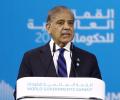
Prime Minister Shehbaz Sharif claims several countries are in talks with Pakistan to acquire its fighter jets following last year's conflict with India. The JF-17 Thunder is reportedly a key focus.

A balloon with Pakistani markings was found on the roof of a house in Una, Himachal Pradesh, causing alarm among residents. Police are investigating the origin of the balloon.

Trump has made similar claims many times since May 10 last year, stating that it was his pressure that led to peace between the two nuclear-armed neighbours as he makes his pitch for the Nobel Peace Prize.

Amid freezing temperatures and treacherous terrains, the Indian Army has intensified its counter-terrorism operations across Kishtwar and Doda districts in Jammu and Kashmir to pursue and neutralise Pakistani terrorists attempting to exploit the harsh winter for concealment, sources said on Saturday.

China has reaffirmed its territorial claims over the Shaksgam Valley, dismissing India's objections to infrastructure projects in the area. The Chinese Foreign Ministry spokesperson stated that the territory is part of China and its activities there are beyond reproach.

The National Investigation Agency (NIA) filed a chargesheet against seven accused in the Pahalgam terror attack case, including Pakistan-based Lashkar-e-Taiba (LeT) and its proxy The Resistance Front (TRF).

'Many senior Bangladeshis feel Bangladesh will fall into anarchy if the Jamaat becomes an important part of a future government or has disproportionate influence in the government.'

Two more individuals have been arrested in Arunachal Pradesh on charges of espionage, bringing the total number of arrests to four. The individuals are accused of sharing sensitive security information with Pakistani handlers.

Bangladesh's local media reported on Wednesday, quoting sources in the Bangladesh Cricket Board (BCB) that Ridhima was axed from the BPL.

The operation was carried out jointly by the 68 Battalion BSF, 176 Battalion BSF, and the Water Wing, with support from local patrol boats.

Over 25 years, societies evolve and tastes change. Cinema absorbs and reflects this transformation. Picking only 25 films from the first quarter of the century is tough.
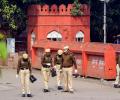
'Rather than deploying Pakistani nationals or using identifiable cross-border materials, the ISI sought to radicalise and recruit local Indian youth, including well-educated professionals such as doctors.'

A Pakistani Hindu woman and her minor daughter have been reportedly kidnapped by unknown gunmen in Pakistan's Sindh province, sparking fear of forced conversion.

The Telangana police on December 16 stated that Sajid Akram, one of the accused in the Bondi Beach terror attack in Australia, was originally from Hyderabad, contrary to earlier reports that had identified the attackers as being of Pakistani origin.

The sources declined to specify the number of drones the Navy plans to acquire but said the focus is now on manufacturing the MK-II in India through partnerships with Hindustan Aeronautics Limited (HAL) and Elcom.
Records stretching back to 1947 suggest a consistent strategy by Pakistan's military and intelligence apparatus, the Inter Services Intelligence (ISI), of using terrorism as a state policy against India.

The Afghanistan cricket team on Saturday paid tributes to the victims of the tragic airstrike in Paktika province ahead of their one-off Test against Zimbabwe.

Even as Pakistan and Afghanistan gear up to meet in Doha on Saturday to broker a peace after days of fighting and air strike the Taliban government said that Afghanistan reserves the right to respond to Pakistani airstrikes on its land.

Pakistani Hindu refugees residing in Delhi's Majnu Ka Tila are experiencing anxiety over their visa status despite government clarifications regarding Long Term Visas (LTVs). The government's decision to revoke all visas issued to Pakistani nationals, following heightened tensions between India and Pakistan, has left many refugees worried about their future. While LTVs for Hindu Pakistani nationals remain valid, the renewal process every two years and ongoing citizenship applications under the Citizenship (Amendment) Act, 2019, have fueled concerns. The Delhi Police has initiated a verification drive, adding to the unease among the refugees, who fear being uprooted yet again. The article highlights the plight of these refugees, who have fled Pakistan seeking a better life in India, and the uncertainties they face in the current political climate.
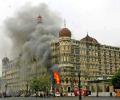
The trial of Abu Jundal, accused in the 26/11 Mumbai terror attacks, is set to resume after the Bombay High Court overturned a lower court order requiring authorities to hand over confidential documents to the accused.

New data reveals a significant drop in UK net migration, with Indian students and workers topping the list of those leaving the country.

Poonam, a 38-year-old woman who came to India from Pakistan in 2004, has been granted Indian citizenship under the Citizenship Amendment Act (CAA). She had been living in Rampur on a long-term visa and expressed joy at finally being recognized as an Indian citizen.

Pakistan on Saturday brought in a Constitutional amendment to create a new post of chief of defence forces to ensure greater coordination and unified command among the three services.

Singh, who worked in a factory in Alwar, was known locally as a 'Siddh Purush' and often participated in religious events. This allowed him to build rapport with defence personnel and civilians alike, the officials said.

An Indian Sikh woman who traveled to Pakistan as part of a pilgrimage has converted to Islam and married a Pakistani man she met online. Her disappearance is being investigated in India.
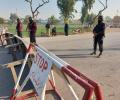
No group or individual claimed responsibility for the attack, but such strikes are usually carried out by the Tehreek-e-Taliban Pakistani (TTP).
The local administration denied the rumours about aerial strikes by the Pakistani fighter jets on the compound, saying the explosives used in bomb making exploded, causing the death of 24 people, including 14 militants.
 © 2026 Rediff.com - Advertise with us - Disclaimer - Privacy Policy - Sitemap - Feedback - About us - Terms of use - Grievances